



When the Home Office asks a sponsor for documents, the deadline is usually whatever the request says, and missing it is a compliance failure in its own right. Paragraph C1.38 of the sponsor guidance is blunt about it: "If you fail to provide the documents when asked or within the timeframe we specify, we will take action against you." The request might arrive while your licence application is being decided, during a compliance check, or while one of your workers is applying for a visa, and each has its own clock.
For an employer with a handful of sponsored workers, a request is an afternoon's work. For one sponsoring dozens, across sites and teams, it is a test of whether the records exist, whether anyone knows where they are, and whether someone owns the deadline. This guide sets out where requests come from, how long you have in each case, and how to run them so the answer goes back complete and on time.
The Home Office can ask for any document it considers relevant
Start with the scope. Under C1.38 of Part 3 of the Workers and Temporary Workers sponsor guidance (version 08/26, valid from 28 August 2026), you must give the Home Office, when asked, "any documents relating to your sponsored workers or the running of your organisation" that it considers relevant to assessing your compliance. The example the guidance gives is your recruitment practices, to check you are recruiting responsibly for eligible roles. So a request is not limited to the records listed in Appendix D, and an answer of "we don't keep that" is not a safe one.
Compliance checks are built around these requests. C7.6 lists what a check can involve, and the first two items are asking you for additional documents or information and verifying what you have already provided. C7.16 adds that the Home Office may check any licensed sponsor by telephone, video, or letter, "asking for evidence to support any information you have given us either before or after your licence was granted". And under C7.21, if the Home Office finds evidence of deception, or cannot verify statements or documents provided by you or someone acting for you, it will assess the evidence and take appropriate action. Answering requests is one of the sponsor licence duties that runs for the life of the licence.
Where requests come from, and how long you have
| When it arrives | How long you have | Where it says so |
|---|---|---|
| After submitting a licence application | 5 working days for the submission sheet and documents, then 5 working days for anything extra the Home Office asks for | Appendix A, 1.3 and 1.4 |
| After a request made through the SMS | 5 working days, and 5 working days again for any further documents | Part 3, C2.19 |
| During a compliance check | The timeframe the request specifies | Part 3, C1.38, C7.6, C7.16 |
| While a worker's application is decided | The Home Office's deadline, or the worker's application may be refused | Part 3, C1.43 |
During your licence application
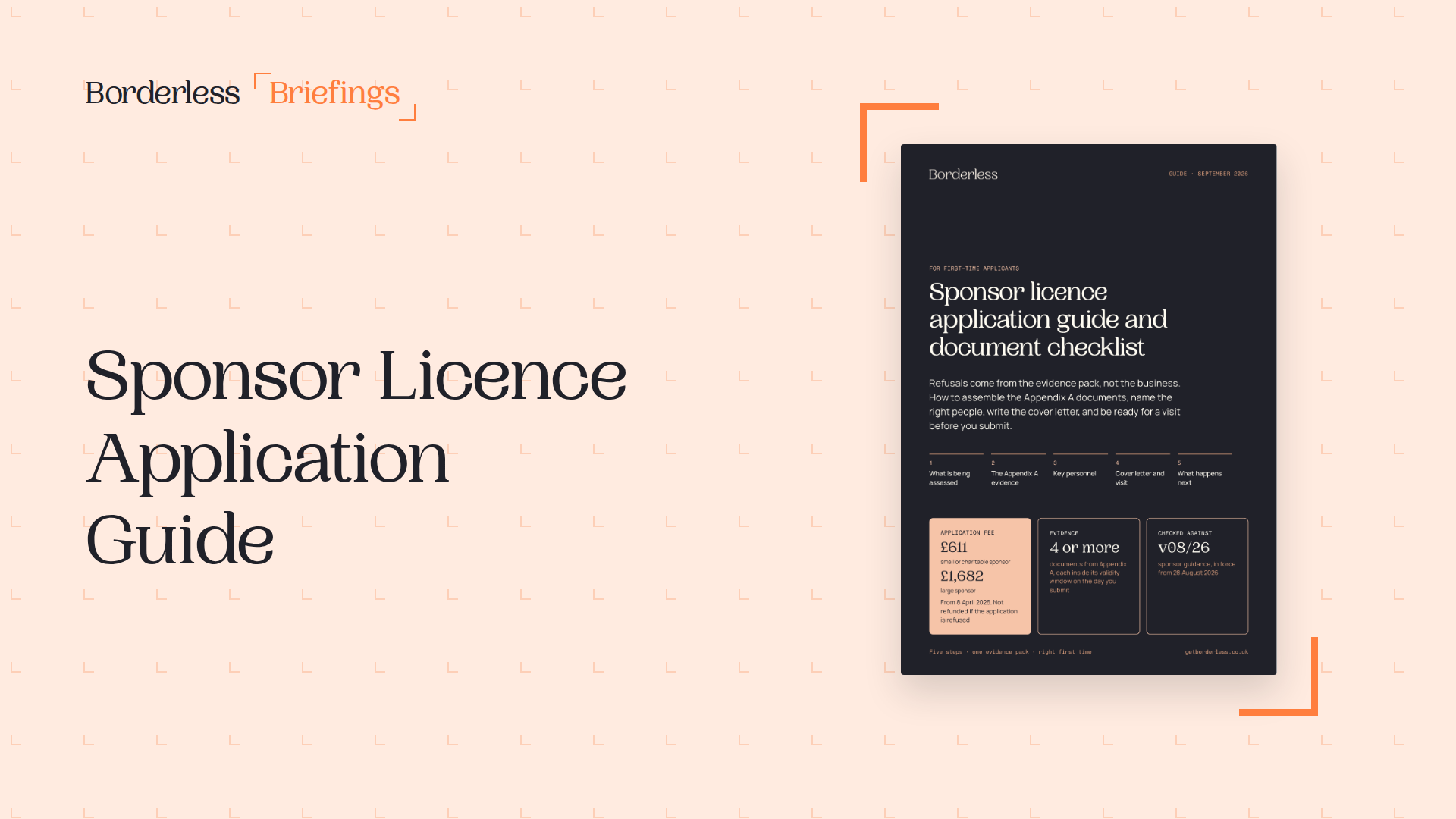
Appendix A (version 04/26, valid from 8 April 2026) sets the first clock most sponsors meet. Once you submit the online application, a submission sheet is generated, your Authorising Officer signs and dates its declaration, and you send all pages of it with your supporting documents "to the email address given on the submission sheet", no later than 5 working days after submitting (1.3).
Section 1.4 then splits the consequences. If a mandatory document is not received within the 5 working days, or is incomplete or in the wrong format, the application is invalid: the Home Office rejects it without considering it and refunds the fee, and you start again. If other documents are missing, or the Home Office needs more, it emails you and gives you 5 working days to send them. Miss that, and the application is refused, the fee is not refunded, and you "may not be eligible to apply again for at least 6 months". The second outcome is the expensive one, and it can happen after the application is otherwise complete.
After a request you made through the SMS
Some changes you request through the sponsorship management system (SMS) need a declaration, supporting documents, or both, and generate a submission sheet. C2.19 gives you 5 working days to send them, and another 5 working days for anything else the Home Office asks for. Miss the deadline and "we will refuse your request and may revoke your licence". A refused request can be made again, provided the licence has not been revoked.
During a compliance check
Here there is no fixed number in Part 3. The deadline is the one in the request, which is why C1.38's wording matters: failing to provide the documents "when asked or within the timeframe we specify" leads to action. Compliance checks can happen at any time, and those that involve visiting or interviewing you can be announced or unannounced (C7.9).
The Home Office's own staff guidance on sponsor compliance visits (version 17.0, published for staff on 19 March 2026) adds two details that are worth knowing, as long as you treat them as instructions to officers rather than rules for sponsors. Before an announced visit, an officer may ask for documents to be sent electronically 48 hours before the visit starts, and must tell you in advance which documents they need to see. But visits "should normally be unannounced", and after one the officer may contact you by telephone, email, or post for anything still outstanding. Our guide to Home Office compliance visits covers the visit itself.
While one of your workers is applying
A worker's visa application can generate a request too. Under C1.43, the Home Office may ask you or the worker for additional information or evidence that the role matches what you put on the Certificate of Sponsorship (CoS), and "may refuse the worker's application if this is not provided within our deadline and/or take compliance action against you". The request is about one worker, but the risk lands on the licence.
Is the email genuine?
Many of these requests come by email. Appendix A, for example, says the Home Office will contact you by email about missing documents (1.4), and searches for the sending addresses suggest plenty of sponsors receive one and are not sure what it is. Appendix A does not list the mailboxes used: the only address it gives is the business helpdesk, and for licence applications it tells you to use the address on your submission sheet. So the safest check is not the sender's address on its own. It is whether the request matches something you know is happening, such as an application you have submitted or a check you have been told about, and whether the details it quotes are ones the Home Office would hold.
Our guide to checking whether a Home Office compliance email is genuine goes through the signs in more detail. If you cannot tell, verify through a channel you already trust before you send anything, and log in to the SMS directly rather than through a link in the email.
What to have ready before anyone asks
Appendix D (version 10/26, valid from 8 October 2026) lists the records you must keep for each sponsored worker. It does not prescribe a storage method. Records can be paper or electronic, "but you must be able to make them available to us on request". You keep them for as long as you sponsor the worker, and then until one year after sponsorship ended or the date a compliance officer examined and approved them, whichever is earlier.
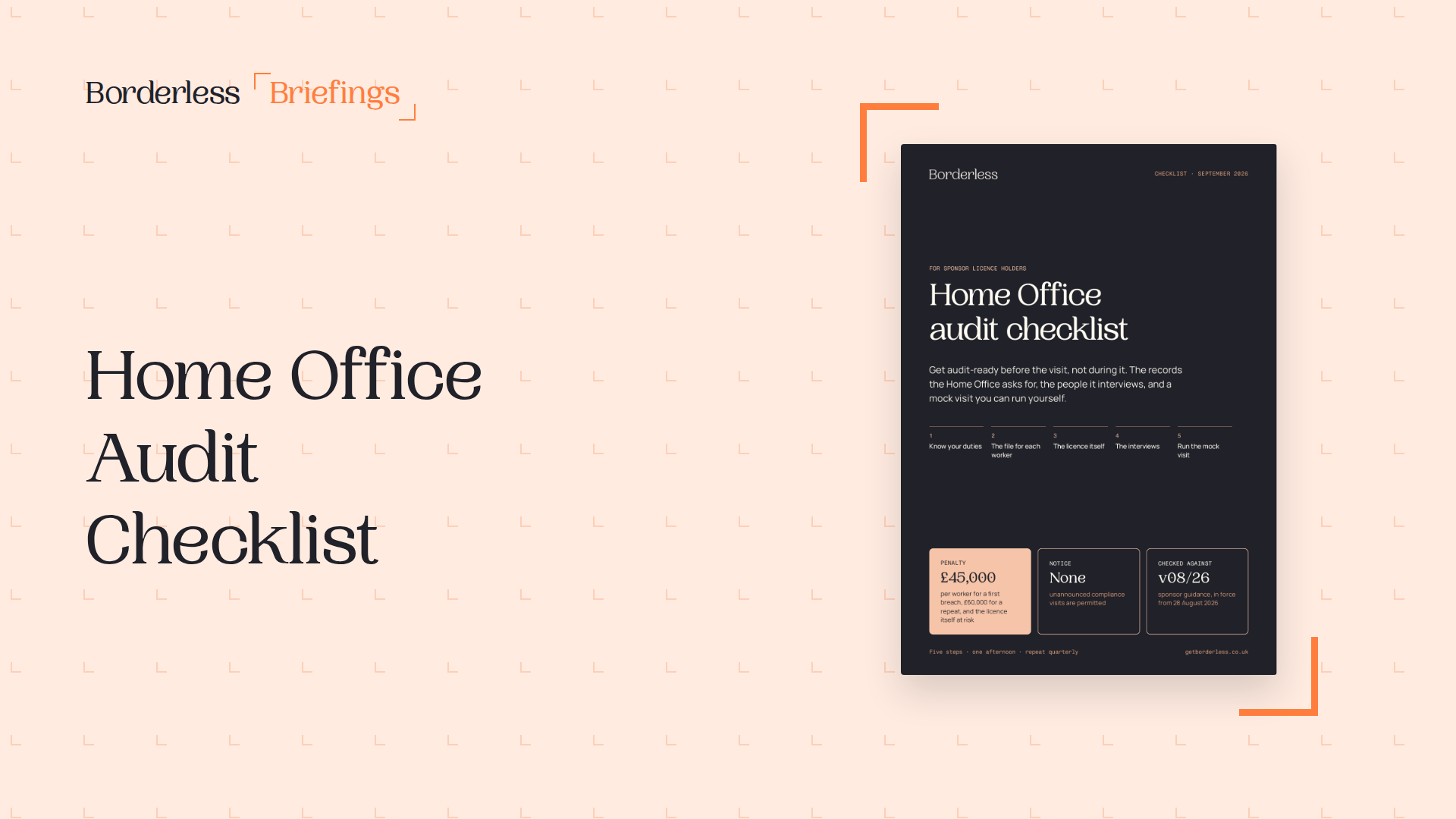
That "on request" is the whole test. A sponsor whose right to work checks sit in one system, contracts in another, and pay records with payroll will hold every record Appendix D asks for and still struggle to answer a request inside the deadline it sets. Our Appendix D record-keeping guide sets out what each worker's file should contain, and our sponsor compliance checker runs a mock Home Office audit if you want to see where the gaps are now.
Running requests at volume
At scale, the risk is often not a missing document but a request landing in one person's inbox, sitting there while they are on leave, and being answered in part. Four habits close most of that gap:
- Give every request one owner, named on the day it arrives, even if several teams supply the documents.
- Convert the deadline into a date on the day it arrives, in working days where the guidance uses them.
- Keep a log of every request: what was asked, what was sent, when, and to which address. It is your evidence that you complied.
- Send what was asked for, complete and in the format required. Appendix A section 6 sets the format rules for licence documents, and C2.18 applies the same rules to documents sent with SMS requests.
A request is a deadline, not a letter
Every route into a document request ends in the same place: send it complete, send it on time, and be able to show you did. Borderless Immigration handles sponsor compliance, including the worker records the Home Office asks to see. If you want to know how quickly your organisation could answer a request today, book a demo and we'll look at your records with you.
Automate Home Office Audits with Borderless
The Borderless platform provides a centralized system for all sponsorships, automating reminders for key tasks and ensuring best practices across your organization, simplifying audit preparation and ongoing compliance.