
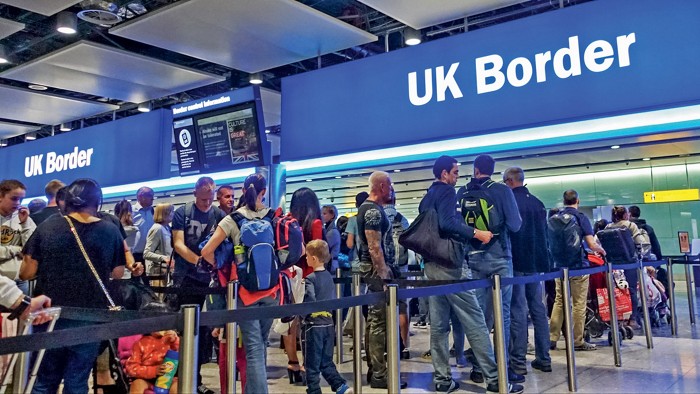
The UK Home Office has introduced one of the most significant updates to immigration policy in recent years through the Statement of Changes HC 1333, laid before Parliament on 14 October 2025.
The latest reforms, introduced under the government’s Plan for Change, reshape multiple immigration categories — from visitor visas and work routes to graduate, family, and private life applications.
If you’re a visa applicant, employer, or immigration adviser, it’s essential to understand what’s changing, when the changes take effect, and how they may affect your future applications or sponsorship duties.
Overview of the Statement of Changes (HC 1333)
HC 1333 is the official legislative instrument used by the UK government to modify the Immigration Rules under the Immigration Act 1971.
The reforms are being introduced on a staggered timeline, with various measures taking effect between October 2025 and January 2026, and a few (notably the Graduate route) applying from January 2027.
This statement represents more than administrative tweaks — it signals a tightening and recalibration of the UK’s immigration system, with a focus on:
- Raising English language standards for work and talent routes
- Shortening the Graduate route stay period
- Introducing new suitability criteria that unify refusal provisions
- Adjusting visitor requirements for specific countries
- Increasing the Immigration Skills Charge for sponsors
Key Dates and Implementation Timeline
Major Immigration Rule Changes Explained
1. Botswana Nationals Now Require Visit Visas
Effective 14 October 2025 at 15:00 BST, citizens of Botswana must now apply for a Standard Visitor visa before travelling to the UK.
Previously, Botswana nationals could enter visa-free. The policy change follows a rise in asylum claims made by Botswana citizens at the UK border — over 600 claims between 2022 and mid-2025, many made at the point of entry.
To reduce disruption, the Home Office has announced a six-week transition period until 25 November 2025, 15:00 GMT. Travellers who booked flights before the announcement and possess valid Electronic Travel Authorisation (ETA) can still travel visa-free during this window.
Additionally, Botswana is now added to the Direct Airside Transit Visa (DATV) list — meaning a visa is required even for airport transits through the UK.
2. Palestine Added to the Visa National List
Following the UK’s formal recognition of Palestine in September 2025, Palestinian nationals have now been officially added to the Visa National List under Appendix Visitor.
While Palestinians were already required to obtain a visa under operational guidance, this amendment formalises the rule within legislation, ensuring legal clarity and consistency post-recognition.
This means Palestinian travellers must continue applying for a visa before visiting the UK, but there is no change in practical entry requirements.
3. English Language Requirement Increased to B2 for Work Routes
From 8 January 2026, applicants under the Skilled Worker, High Potential Individual (HPI), and Scale-Up Worker routes must demonstrate B2-level English under the Common European Framework of Reference for Languages (CEFR).
This is an upgrade from the previous B1 level, aligning with A-Level equivalent proficiency.
At B2 level, applicants must be able to:
- Communicate effectively in professional or academic settings
- Understand complex written texts
- Produce detailed written communication on various topics
- Engage fluently in conversation with native speakers
Applicants will need to provide a Secure English Language Test (SELT) result from a Home Office–approved provider to meet this new standard.
Those extending an existing visa under the same route (e.g. Skilled Worker to Skilled Worker extension) are not required to meet the higher level; the B2 threshold applies only to new applications from January 2026 onwards.
Employer impact:
- Recruiters and HR teams must update job advertisements and offer letters to reflect the new requirement.
- Longer lead times may be necessary to accommodate additional testing.
- Consider updating sponsorship policies to help candidates meet the new language bar in time.
4. Graduate Route Reduced to 18 Months
From 1 January 2027, the Graduate visa duration will be shortened from two years to 18 months. PhD graduates will retain the three-year post-study stay.
The Home Office has justified this change by citing evidence that many graduates were not progressing into graduate-level roles during their post-study period. The policy aims to encourage faster transition into skilled employment and ensure the route supports the UK economy’s skills needs.
For international students, this means:
- Less time to secure graduate-level employment after completing studies
- The need to plan job searches early and target employers with sponsor licences
- Tighter timelines for switching into the Skilled Worker route
For employers:
- Organisations relying on graduate intakes should bring forward recruitment cycles
- Sponsorship transitions should be planned before the 18-month period ends
5. High Potential Individual Route Expansion and Annual Cap
The High Potential Individual (HPI) visa — designed to attract global graduates from top universities — will undergo two significant changes from 4 November 2025:
- The list of eligible universities will double, broadening access for international graduates.
- An annual cap of 8,000 approvals will be introduced to manage volume.
The Secretary of State retains the power to exclude certain institutions if their inclusion poses national security or foreign policy concerns.
These measures balance the UK’s desire to attract world-class talent with its commitment to maintaining controlled migration.
For employers:
Early application planning will become critical, as demand for HPI slots may exceed the annual quota in popular months.
6. Immigration Skills Charge (ISC) Increased by 32%
As part of the Plan for Change, the government has announced a 32% increase to the Immigration Skills Charge (ISC) from 16 December 2025.
The ISC — paid by employers sponsoring foreign workers — will rise from £1,000 to £1,320 per sponsored worker per year for large sponsors.
Impact for employers:
- Expect higher sponsorship costs for both new Certificates of Sponsorship and renewals
- HR and finance teams should update budget forecasts and adjust headcount planning
- The cost increase further highlights the importance of retaining existing sponsored staff
7. Structural Overhaul: Part 9 Replaced by Part Suitability
A significant legal restructuring has been introduced with the replacement of Part 9 (Grounds for Refusal) by a new Part Suitability section.
The change aims to standardise and simplify refusal terminology across all immigration categories.
Key points:
- Paragraph 39E, covering exceptions for overstayers, is now included under Part Suitability.
- Routes under Appendix FM (Family), Appendix Private Life, and Appendix Settlement Family Life now refer to common suitability provisions, replacing older, route-specific grounds for refusal.
While this does not alter sponsor obligations, it modernises the language used in decision notices and simplifies cross-route interpretation for applicants and caseworkers.
8. Seasonal Worker Visa Restrictions
From November 2025, Seasonal Worker visa holders may stay in the UK for no more than six months within any rolling ten-month period, compared with the previous 12-month calculation window.
Sponsors using the scheme must carefully track assignment dates and re-entry schedules to remain compliant.
9. Country & Travel Updates
In addition to Botswana and Palestine visa changes, travel rules for German school groups have been eased.
From 25 November 2025, students aged 19 or under travelling as part of organised school trips of five or more can enter the UK without a visa or ETA, mirroring arrangements already in place for France.
10. Statelessness, Ukraine, and Student Updates
HC 1333 extends eligibility for family members of stateless individuals and introduces further updates to Ukraine schemes and student rules.
- Statelessness: Partners and children of recognised stateless persons can now apply under Appendix Statelessness, provided they were part of the family unit before the main applicant’s grant of permission.
- Ukraine Permission Extension Scheme: Children’s visas will now align with their legal guardian’s permission period, improving family stability.
- Students: Those who have completed their course are now permitted to establish a business and switch into the Innovator Founder route.
- Maintenance requirements have been increased in line with UK living cost rises for the 2025–2026 academic year.
11. Other Technical Amendments
- Global Talent visa: Expands recognition for group work achievements (notably in architecture) and adds new Prestigious Prizes.
- Tier 1 (Entrepreneur): Remaining provisions formally deleted, reflecting route closure.
- EU Settlement Scheme: Clarifications added regarding pre-settled to settled status transitions.
- Sports Governing Bodies: Updated list of recognised entities for endorsements.
- Child Student route: Enhanced safeguarding requirements for guardians and accommodation arrangements.
Employer Perspective: What These Changes Mean
The combined effect of HC 1333 is a tightening of access to the UK labour and study markets — increasing both compliance and cost burdens for sponsors.
Key takeaways for HR and global mobility teams:
- Raise internal awareness of the B2 English shift well before January 2026.
- Bring forward Graduate-to-Skilled sponsorships to adapt to the shorter 18-month limit.
- Model budgets to account for the 32% ISC increase.
- Review policy documentation and staff guidance to reflect the Part Suitability framework.
- Monitor workforce composition under Seasonal Worker limits and HPI caps.
Employers that plan early, adjust processes, and communicate proactively will be best placed to maintain talent pipelines under the new framework.
Applicant Guidance
For visa applicants, these changes mean more preparation, stricter requirements, and tighter timelines.
- Language preparation: If you plan to apply for a Skilled Worker or HPI visa in 2026, begin English testing early to meet the B2 threshold.
- Graduate route planning: Students graduating in 2026 or 2027 should map out career and sponsorship goals early, as the new 18-month limit may affect post-study opportunities.
- Visitor eligibility: Botswana and Palestine nationals must apply for a visa before travel.
- Family and private life: Expect more uniform decision-making standards under the new suitability provisions.
Conclusion
The UK Immigration Rules Changes 2025 (HC 1333) mark one of the most comprehensive overhauls to the system in recent years.
They introduce higher language and suitability standards, shorter graduate pathways, and new financial and compliance obligations for employers. While the government’s focus remains on managing migration and promoting skilled employment, these reforms will require careful planning by both individuals and organisations.
Understanding the implementation timeline — and adapting processes accordingly — will be critical for anyone affected by the new rules.
Automate Home Office Audits with Borderless
The Borderless platform provides a centralized system for all sponsorships, automating reminders for key tasks and ensuring best practices across your organization, simplifying audit preparation and ongoing compliance.