

If the Home Office contacts you to request additional documentation, it does not automatically mean your application will be refused — but it does mean that something is missing, unclear or requires verification before a decision can be made.
This is a critical stage in the immigration process. How you respond, how quickly you respond, and what you submit can directly affect whether your application is approved, delayed or refused.
This guide explains why the Home Office requests additional documents, what usually triggers a request, how long you have to respond, and when it makes sense to seek professional support.
Key takeaways
- A request for additional documents is a formal part of the decision process
- The Home Office usually sets a strict deadline, often 5–10 working days
- Failing to respond correctly or on time can lead to refusal
- Submitting inconsistent or incorrect documents can create future immigration risk
- Sponsored applications can trigger employer compliance scrutiny
Why does the Home Office request additional documents?
The Home Office requests further documentation when it cannot confidently decide an application based on the information already provided.
This usually happens where:
- Mandatory evidence is missing or incomplete
- Documents do not clearly meet the Immigration Rules
- Information conflicts with Home Office records
- Additional verification checks are required
In many cases, this is the Home Office giving you an opportunity to clarify or correct an issue before making a final decision.
Common reasons additional documentation is requested
Missing or incomplete evidence
This is the most common reason for a document request. Typical examples include:
- Payslips or bank statements not covering the required period
- Employment letters missing required details
- Qualifications not clearly meeting route criteria
- Translations missing proper certification
Even small technical gaps can result in a follow-up request.
Inconsistencies in the application
Where information does not align across documents, the Home Office may ask for clarification.
Common triggers include:
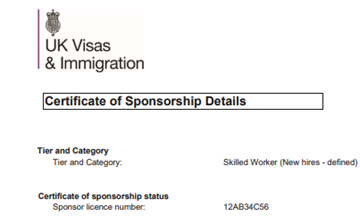
- Job title or salary not matching the Certificate of Sponsorship (CoS)
- Conflicting employment dates
- Sponsor details not matching UKVI records
This is particularly common on sponsored routes such as Skilled Worker.
Certificate of Sponsorship (CoS)
https://www.getborderless.co.uk/blog/certificate-of-sponsorship
Identity or immigration history checks
Additional documents may be requested to verify:
- Passport or travel document details
- Immigration history
- Digital immigration status (eVisa) records
As UKVI relies increasingly on digital records, mismatches between identity data and Home Office systems frequently trigger requests.
Sponsor or employer verification
For sponsored applications, the Home Office may request documents from the employer, including:
- Employment contracts
- Payroll or PAYE evidence
- Confirmation the role is genuine and meets skill and salary thresholds
- Organisational records held by the sponsor
These requests can feed into broader sponsor compliance assessment.
Learn more: Sponsor Management System (SMS)
https://www.getborderless.co.uk/blog/sponsor-management-system
How will the Home Office contact you?
Requests for additional documentation are usually issued via:
- Email to the address used in the application
- Your online visa application account
- A legal representative, if one is appointed
The message will specify:
- What documents are required
- How they must be submitted
- The deadline for response
Deadlines should always be treated as strict, even where the tone appears informal.
How long do you have to respond?
In most cases, the Home Office allows:
- 5 working days for straightforward requests
- 10 working days for more complex evidence
Extensions are rare and usually only granted in exceptional circumstances. If you miss the deadline, the Home Office can decide the application based solely on the evidence already submitted — which often results in refusal.
How to respond to a Home Office document request
Read the request carefully
Do not guess what the Home Office wants. Provide exactly the documents requested, in the format specified.
If the request is unclear or broad, submitting the wrong evidence can create further issues.
Ensure evidence is complete and consistent
Before submitting, check that:
- Documents cover the correct time period
- Figures, dates and job details align across all evidence
- Files are legible and properly labelled
- Any translations meet Home Office requirements
Submitting partial or inconsistent evidence can increase refusal risk.
Avoid overloading the application
Uploading unnecessary documents “just in case” often introduces contradictions and slows down decision-making. The aim is clarity, not volume.
When to seek help from qualified immigration experts
A request for additional documentation is often the point where applications either succeed or fail. While some requests are straightforward, others involve technical interpretation of the Immigration Rules, sponsorship compliance, or evidential judgment calls.
It is sensible to seek help from qualified immigration experts where:
- The request is unclear or broadly worded
- The documents relate to employment, salary or sponsorship
- There are inconsistencies across evidence
- The deadline is short and the consequences of refusal are high
- A refusal would affect future applications or sponsor compliance
Specialist support can help ensure the response:
- Meets the Immigration Rules and Home Office guidance
- Aligns with existing UKVI records
- Does not introduce new contradictions
- Is submitted correctly and on time
Borderless supports employers and individuals with Home Office document requests, including:
- Visa processing and application support
https://www.getborderless.co.uk/visa-processing - Sponsorship management and compliance
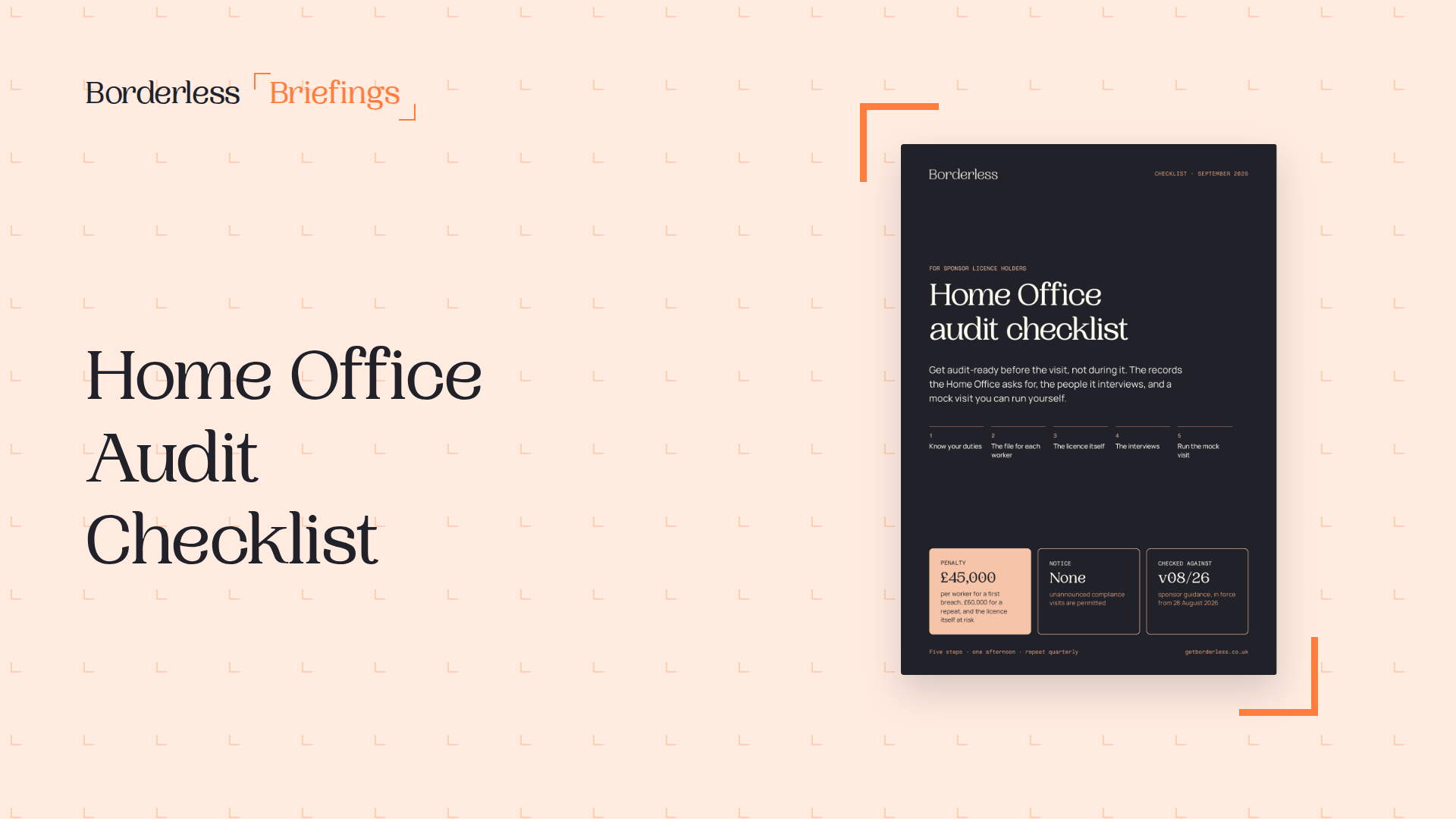
https://www.getborderless.co.uk/sponsorship - Mock audits and compliance readiness checks
https://www.getborderless.co.uk/mock-audits
This coordinated approach reduces the risk of delays, refusals and downstream compliance issues.
What happens after you submit the documents?
Once additional documents are submitted:
- The Home Office reviews the new evidence
- The application returns to the decision queue
- Processing times may be extended
There is usually no confirmation beyond an automated acknowledgment. Decisions may follow quickly, or take several weeks depending on complexity.
What happens if you do not respond?
If you fail to respond by the deadline:
- The application may be refused
- The Home Office may record non-compliance
- Future applications may face increased scrutiny
For sponsors, this can also raise compliance concerns and contribute to enforcement action.
Does a document request mean refusal is likely?
Not necessarily. In many cases, it indicates the Home Office is actively considering approval — provided the issue can be resolved.
However, late, incomplete or inconsistent responses significantly increase refusal risk.
Summary
When the Home Office requests additional documentation, it is a pivotal stage in the application process.
Handled correctly, it is often an opportunity to resolve issues and secure approval. Handled poorly, it can result in refusal, delays and longer-term immigration or compliance problems.
Whether you are an individual applicant or a sponsoring employer, timely, accurate and consistent responses — and seeking expert support where appropriate — are key to reducing risk.
Automate Home Office Audits with Borderless
The Borderless platform provides a centralized system for all sponsorships, automating reminders for key tasks and ensuring best practices across your organization, simplifying audit preparation and ongoing compliance.