Indefinite Leave to Remain (ILR) is one of the most significant milestones for migrants in the UK. It grants permanent residency, allowing individuals to live, work and study in the UK without time restrictions, and it opens the path to British citizenship.
This guide explains who is eligible for ILR, the requirements, how the application works, and what happens after you are granted ILR. Whether you are a skilled worker, care worker or family visa holder, it covers the essentials of your route to settlement.
What is Leave to Remain?
Leave to Remain is permission for non-UK citizens to stay in the UK legally. There are three main categories:
- Limited Leave to Remain: granted for a set period under a visa.
- Further Leave to Remain: an extension of an existing visa.
- Indefinite Leave to Remain: permanent lawful status, also known as settlement.
With ILR you are no longer subject to immigration control. You can live in the UK without time restrictions, work for any employer or be self-employed, access public funds if eligible, use the NHS and education system, and apply for British citizenship.
Who can apply for ILR?
Eligibility depends on your current visa and length of stay. Common routes to ILR include:
- Skilled Worker visa (after five years)
- Health and Care Worker visa
- Family visas (partner, parent, child)
- 10-year long residence
- Global Talent, Scale-up, Innovator Founder and Ancestry visas
- Refugee or humanitarian protection status
- Returning residents
Some routes settle sooner. For example, Global Talent may be eligible after two or three years depending on the field and contribution.
ILR eligibility requirements
1. Continuous residence: you must have lived lawfully in the UK for the required time without exceeding 180 days outside the UK in any 12-month period. UK Visas and Immigration (UKVI) tracks this closely.
2. English language: you must show B1 level English using an approved Secure English Language Test (SELT).
3. Life in the UK Test: a multiple-choice exam on UK history and society, required for most applicants aged 18 to 64.
4. Good character: you must not have serious or recent criminal convictions or immigration breaches.
5. Visa-specific requirements: for example, Skilled Worker visa holders must meet the salary rules for their role (the general minimum is £41,700 from 22 July 2025, or the going rate, whichever is higher).
ILR for dependants
Spouses, partners and children can apply alongside or after the main applicant, depending on their residence. They must prove their relationship to the main applicant, meet the continuous residence threshold, and pass the Life in the UK Test and English test where applicable. Children born in the UK to a parent with ILR may automatically acquire British citizenship.
How to apply for ILR
Step 1: Check your eligibility. You can usually apply up to 28 days before reaching your qualifying residence period.
Step 2: Choose the correct form. SET(O) for work, long residence and ancestry; SET(M) for family visas.
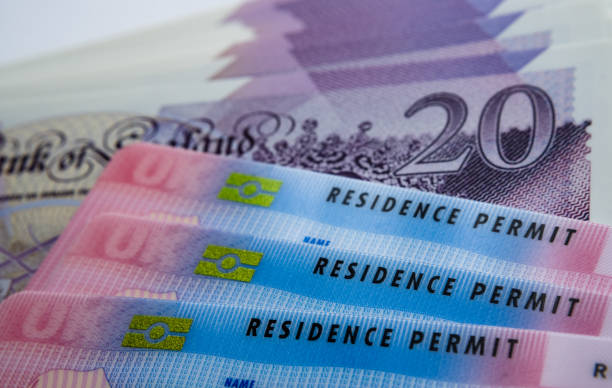
Step 3: Prepare your documents. These usually include your valid passport, your eVisa accessed through your UKVI account (or a Biometric Residence Permit if you still hold one), proof of residence and travel records, payslips and employer letters, your Life in the UK Test certificate, and your English test certificate or qualification.
Step 4: Book your biometric appointment at a UKVCAS centre for fingerprints and a photograph.
Step 5: Submit and pay. The ILR application fee is £3,226 per applicant from 8 April 2026. Priority (five working days) and super priority (next working day) services are available for an extra fee.
Step 6: Wait for the decision. Standard processing can take up to six months, so make sure your documents are clear and complete to avoid delays.
What happens after ILR is granted?
Once approved, your ILR is recorded on your eVisa, accessed through your UKVI account. It lets you live and work in the UK permanently, access public services, and sponsor family members. ILR can be lost if you leave the UK for more than two consecutive years, are subject to deportation, or obtained it by deception, so keep regular ties to the UK.
ILR and British citizenship
ILR is a prerequisite for British citizenship. You can usually apply for naturalisation 12 months after receiving ILR, or immediately if you are married to a British citizen. Citizenship adds rights such as voting and a British passport.
Common mistakes to avoid
- Applying outside the 28-day window.
- Incomplete or incorrect documents.
- Failing the Life in the UK Test.
- Using a non-approved English test.
- Not disclosing absences or convictions.
Frequently asked questions
How long does ILR last? Indefinitely, unless lost through long absence or revocation.
Can I apply early? Yes, up to 28 days before reaching the qualifying period.
Can I travel while my application is pending? You should not travel outside the UK while it is being decided, or it may be withdrawn.
Is ILR the same as citizenship? No. ILR is permanent residency, not citizenship.
Supporting your ILR journey
At Borderless, we help employers and individuals through every stage, from sponsor licence applications to the visa process and ILR, and we keep sponsors on top of Home Office compliance. Estimate your costs with our visa fees calculator, or contact us to speak to an adviser.
Automate Home Office Audits with Borderless
The Borderless platform provides a centralized system for all sponsorships, automating reminders for key tasks and ensuring best practices across your organization, simplifying audit preparation and ongoing compliance.